Piers · Walls · Crawl spaces

Nashville Foundation Contractors

Corner dropping or basement wall leaning in? Get the repair that fits the problem you actually have, without paying for work you don't need.

Push and helical piersWall anchors and bracingCrawl space supports
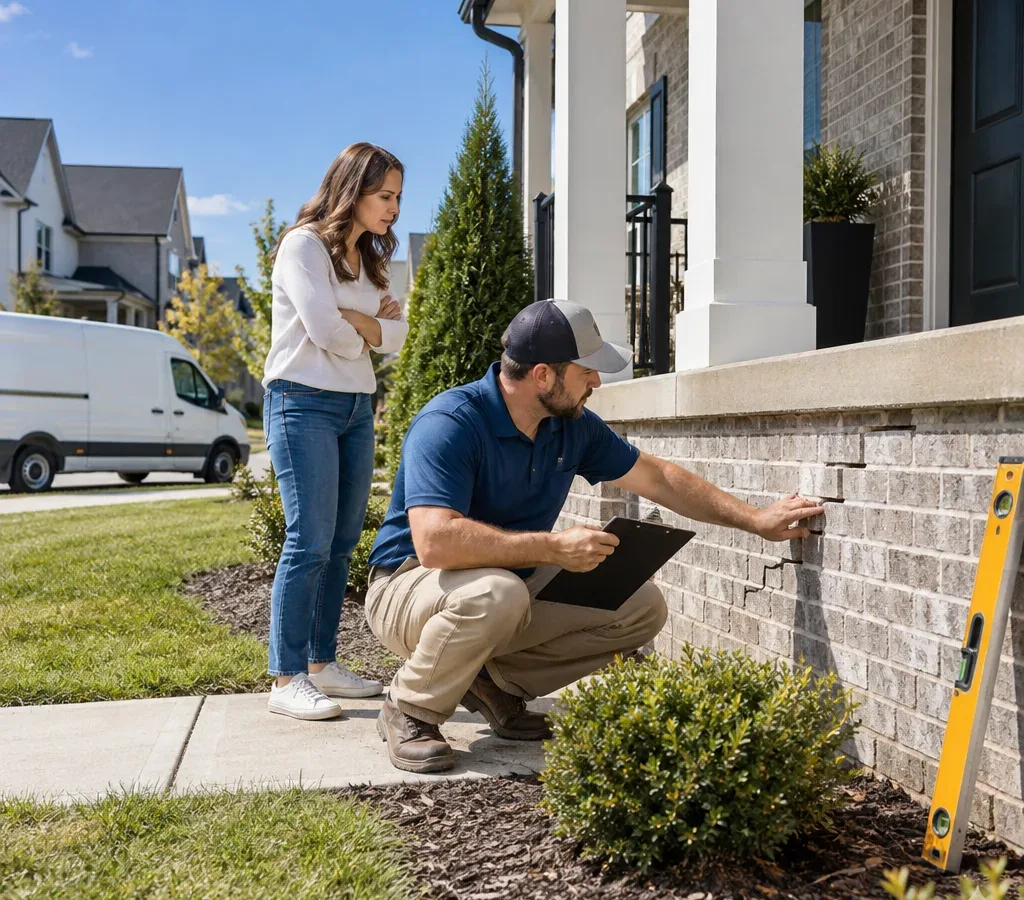
Nashville foundation contractors checking a stair-step crack in a brick wall near a front porch

What Foundation Contractors in Nashville, TN Actually Fix

Foundation contractors handle the structural side of a house: the footings, the walls below the floor, and the beams and piers that hold it up. Most calls come down to one of three problems: a section that's sinking, a wall being pushed in, or a floor sagging between supports.

Each has its own fix. Piers carry a sinking section down to firmer ground. Anchors, steel beams or carbon fiber straps hold a basement wall against soil pressure. New posts, footings or a reinforced beam take the bounce out of a crawl space floor.

A good contractor tells you which one you have before quoting, and says so plainly when a crack only needs watching. Costs, warning signs and how the local soil behaves are covered on the Foundation Repair Nashville Tennessee home page.
Call (629) 262-5242
First visit

What Gets Checked Before Anyone Quotes

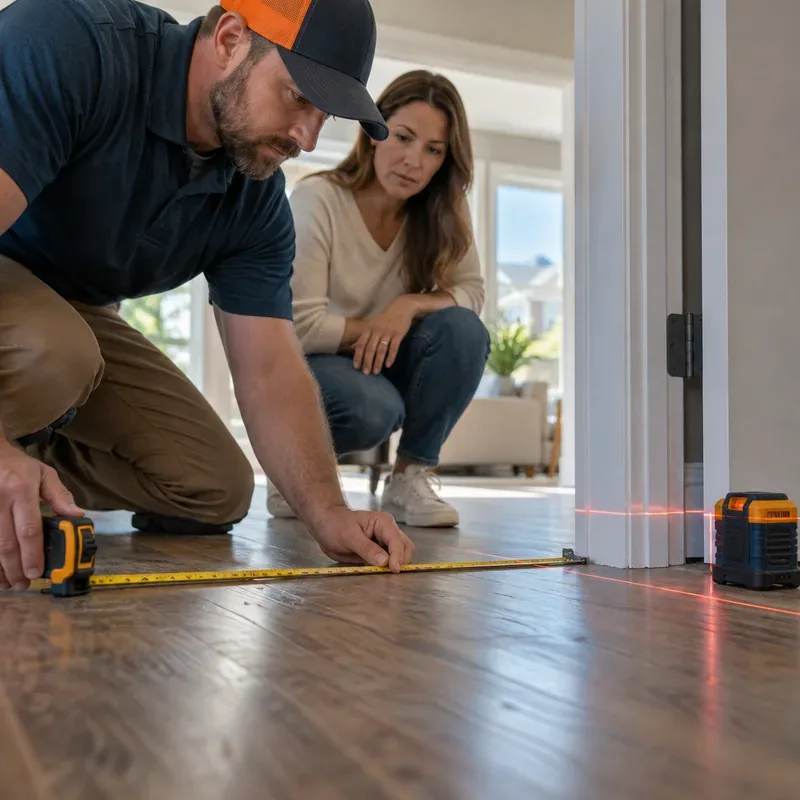
Laser level line and tape measure on a wood floor beside a door frame

A quote is only as good as the look behind it. The visit usually covers:

  • Inside: crack direction, door and window fit, floor levels measured room to room, and gaps at trim.
  • Outside: brick and block cracks, corners, porches and stoops, and whether the yard slopes water toward the house.
  • Underneath: crawl space posts, beams and piers, or basement walls checked for bowing, leaning and water staining.

Depth to rock matters around Nashville, Tennessee more than in many places. In parts of Davidson County, limestone sits only inches below the surface, while other lots have a few feet of clay over it. That changes how deep piers go and which type fits, so it gets sorted out early.

You should come away knowing what's moving, why, and what each option would involve.

Call (629) 262-5242
Repairs

Repairs by Problem

Call (629) 262-5242

Sinking corners and walls

Steel push piers or helical piers go under the footing and are driven to rock or firm soil, then the load is moved onto them. Some lift is often possible.

Bowed or leaning basement walls

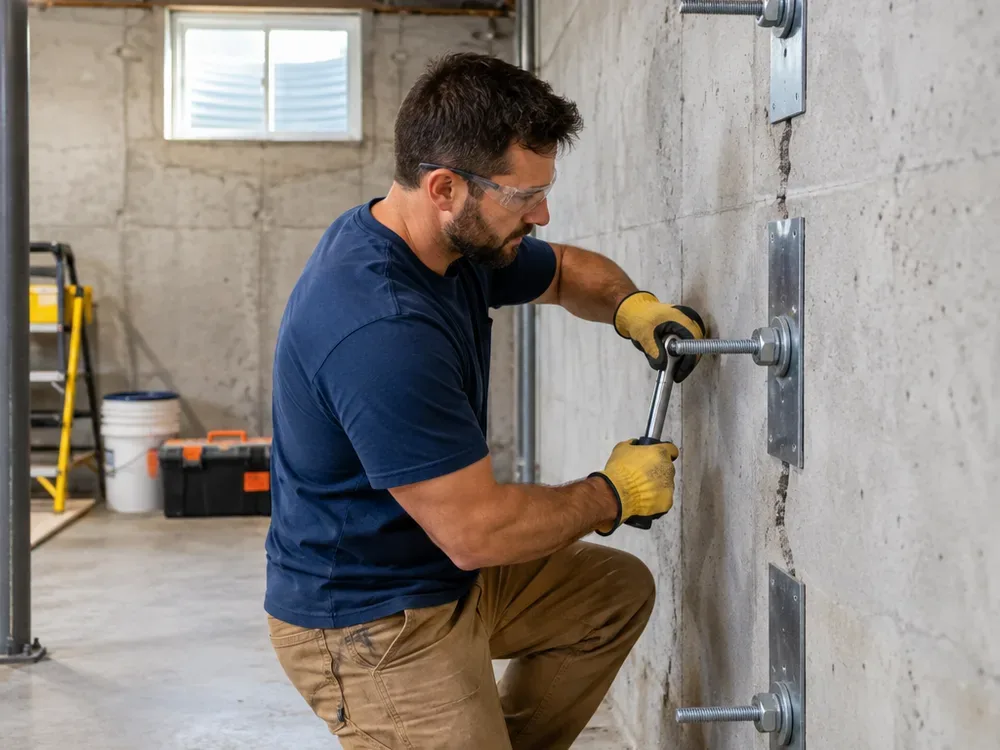
Wall anchors, steel beams or carbon fiber straps stop inward movement. Walls that lean badly may need digging out on the outside first.

Sagging crawl space floors

Added posts on proper footings, shimmed or replaced piers, and reinforced joists or beams bring floors back toward level.

Slab cracks and settling

Slabs are checked for where they dropped and why. Piers handle real settlement; hairline shrinkage cracks don't need them.

Chimneys, porches and stoops

These often sit on their own small footings and settle separately. A pier or two can stop a chimney from pulling away from the house.

Water against the walls

Downspout extensions, regrading and drains keep water from soaking the clay right at the footing, which helps any structural repair last.

How it goes

From First Visit to Finished Work

  1. Step01

    Share what you've noticed

    When it started, whether it changes with the seasons, past water problems and any earlier repairs.

  2. Step02

    On-site evaluation

    Measurements and a look inside, outside and underneath, focused on the pattern of movement.

  3. Step03

    Options and pricing

    The recommended method, the number of piers or braces and the access needed, with alternatives when there's more than one sound approach.

  4. Step04

    Permit and scheduling

    Structural work often needs a permit from Metro Codes and Building Safety. The contractor checks what applies and plans around landscaping, fences and crawl space access.

  5. Step05

    Repair and review

    After stabilization, the work is reviewed with you, including which drywall, trim or door adjustments are best left until the house has settled onto its new supports.

Call (629) 262-5242
Pricing

What Do Pier and Wall Jobs Run?

Foundation repair in Nashville, TN typically costs about $3,800 to $16,000, and steel piers typically run about $1,200 to $2,500 per pier. The pier count moves the number most: a chimney may need only one or two, while a whole side of the house needs many more.

Wall bracing is priced by the number of anchors, beams or straps, and crawl space work by how many supports are added. Access, digging depth and drainage add to the total. These are typical ranges, not quotes.

Call (629) 262-5242

Common Methods, Up Close

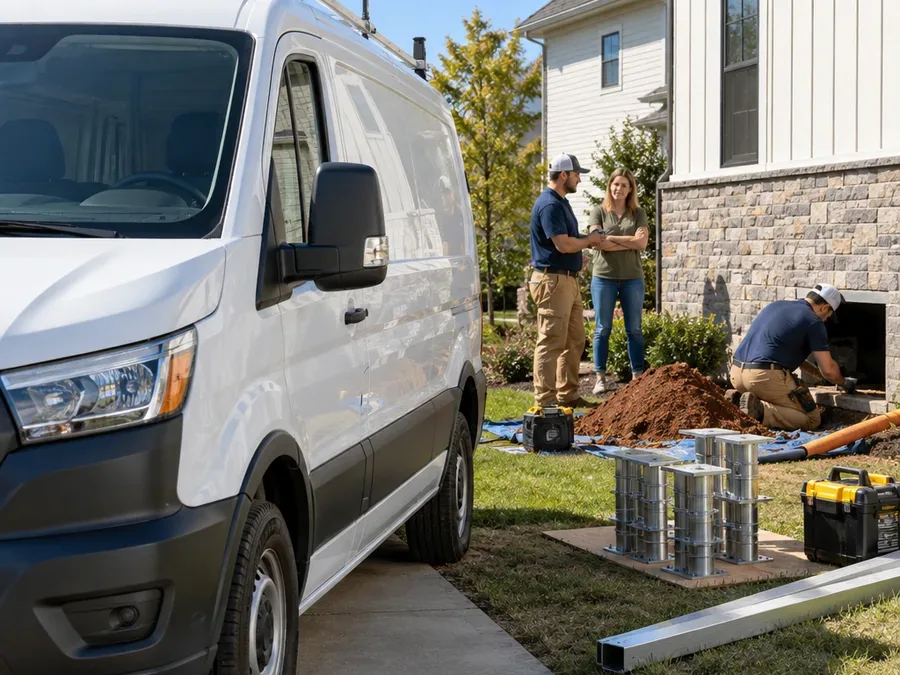
Steel pier sections staged on a lawn beside a dug-out footing at a brick house
Pier sections are staged and the footing is dug out before installation.
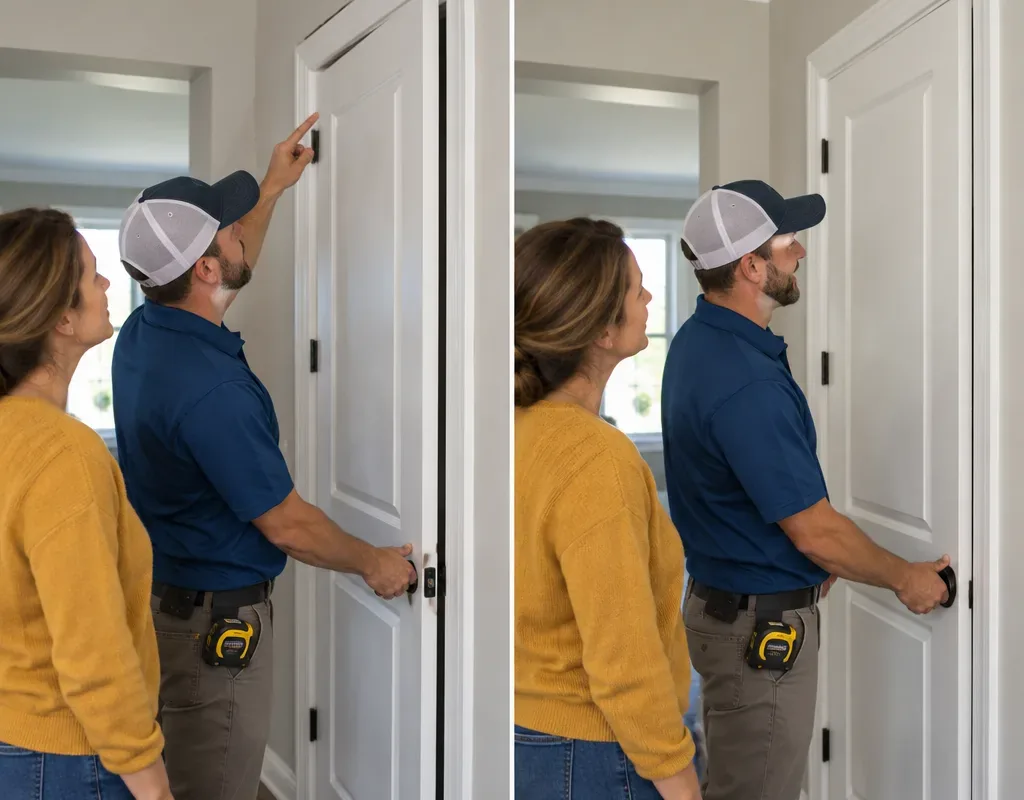
Interior door with an uneven gap at the top corner of its frame
Doors and trim often need adjusting once a house is stabilized.
Worker tightening a wall anchor plate on a cracked concrete basement wall
Wall anchor plates hold a cracked basement wall against soil pressure.
Call (629) 262-5242
Questions

Before You Hire

How do I choose between foundation contractors?

Pick the one whose recommendation matches what was found. A good estimate ties each pier or brace to a specific crack, slope or wall and explains why that method fits.

What makes foundations move in Nashville?

Mostly water and clay. The clay over the limestone swells when wet and shrinks when dry, and downspouts or grading that send water toward the house make that cycle worse right at the footing.

Are push piers or helical piers better?

Neither is better everywhere. Push piers use the weight of the house to drive steel down and suit heavier homes, while helical piers screw in and suit lighter loads like porches and additions.

Will doors and floors go back to normal after piers?

They often improve, but not always fully. Drywall touch-ups and trim or door adjustments are common once the house is stable.

Can foundation work happen in wet weather?

Usually, though saturated clay can slow digging around footings. Work is scheduled around conditions so open trenches aren't left filling with water.

Do bowed basement walls always need replacing?

No. Most bowed walls can be held with anchors, steel beams or carbon fiber straps; replacement is for walls that have moved too far to brace.

Find Out Which Fix Your House Needs

Tell the contractor what you're seeing and get a straight answer on cause, method and cost before you commit to anything.